What does an artificial grass bacteria remover actually do?
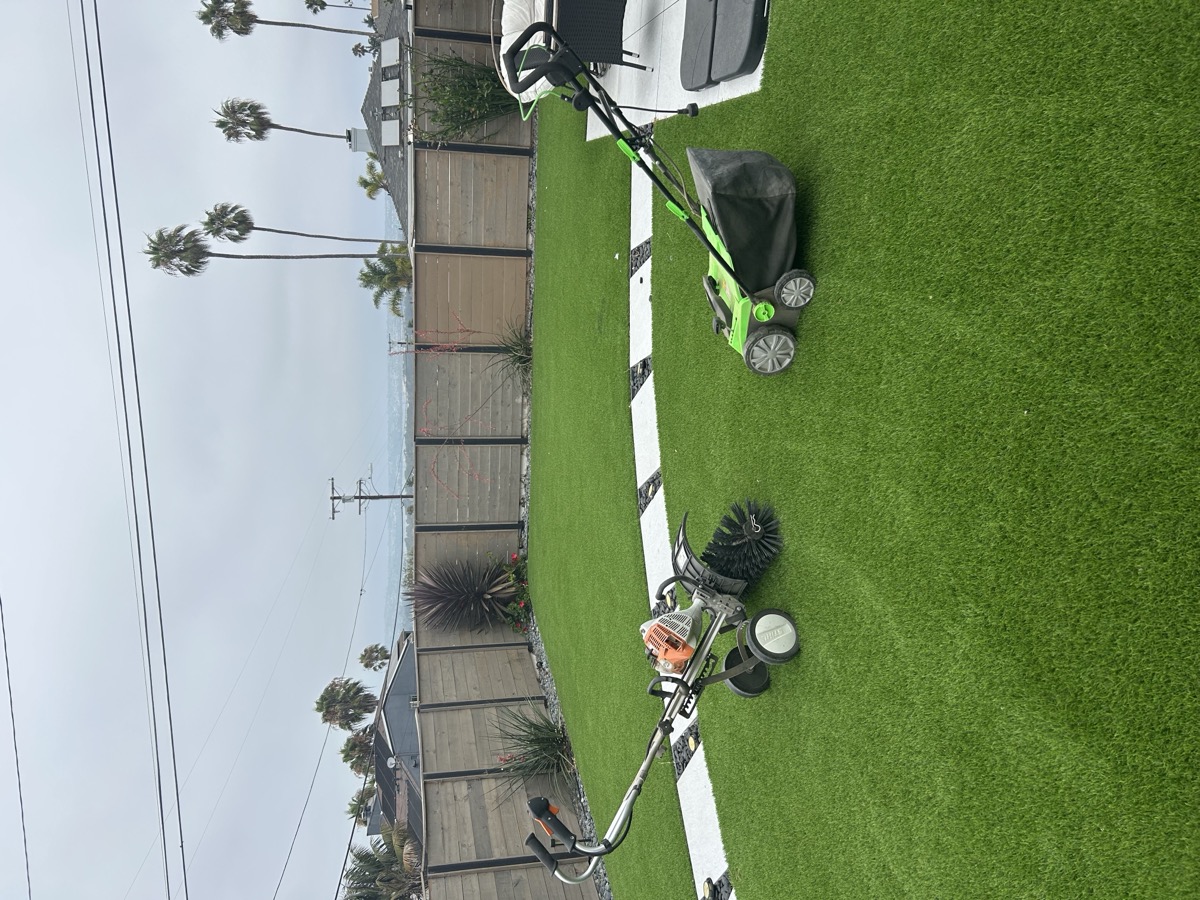
A bacteria remover for artificial grass is a cleaning step, not a spray. We clear loose debris with a power broom and power sweep, work a peroxide-based cleaning solution into the turf, apply pet-friendly infill, and run an extractor on yards with tough smells. We make no germ-kill claims.
Last updated: October 2026
People search for a bacteria remover when the yard smells and the dog uses it daily. The smell is the real complaint, and it lives in the infill, not on the blades.
Why does a hose rinse not fix it?
A hose moves surface dirt around. It does not pull anything out of the base.
On a warm afternoon the smell comes back, usually within hours. We hear this from Poway and Rancho Bernardo dog owners all the time.
What do we do on a pet yard?
- Remove loose debris with a power broom and power sweep.
- Apply the cleaning solution, a peroxide-based product, to the turf surface, focusing on high-use and problem areas.
- Apply pet-friendly infill.
- Run the extractor, only on yards with tough smells.
- Final inspection, and we address anything that needs more attention.
We clean over 50 yards per month. A 500 sq ft backyard takes about 1.5 to 2.5 hours.
What do we not claim?
We do not publish kill rates or sanitizing percentages. We have not measured them, so we leave them out.
What we can say is what we do and what we see: cleaner infill, upright blades, and less odor after the job. Yards with tough smells get the extractor, and not every yard needs it.
How often should a dog yard be cleaned?
It depends on the number of dogs and the sun exposure. Our post on how often to clean turf with dogs covers the schedule.
For the full process, see our services page or pet turf cleaning in Poway. If we cleaned your yard, tell other neighbors about it on Google and mention your area.