Last updated: July 2026
Why does inland San Diego turf feel gritty and drain slowly?
Santa Ana winds carry fine dust off the inland canyons and pack it into turf infill, where it fills the void space water needs to move through. The yard feels crunchy underfoot and drains slower every season. Deep infill cleaning flushes that grit out and restores the drainage path.
The turf in Carmel Mountain Ranch and Scripps Ranch takes a different beating than the coastal yards.
Down in La Jolla and Del Mar we deal with salt crust. Up here the problem is dust. Every Santa Ana event pushes a fine mineral grit off the canyons and into open yards, and because turf infill is loose granular material with air space between the grains, that dust has somewhere to go. It settles in. Then the next wind event adds more.
What packed infill does to a yard
Drainage is the first thing to go.
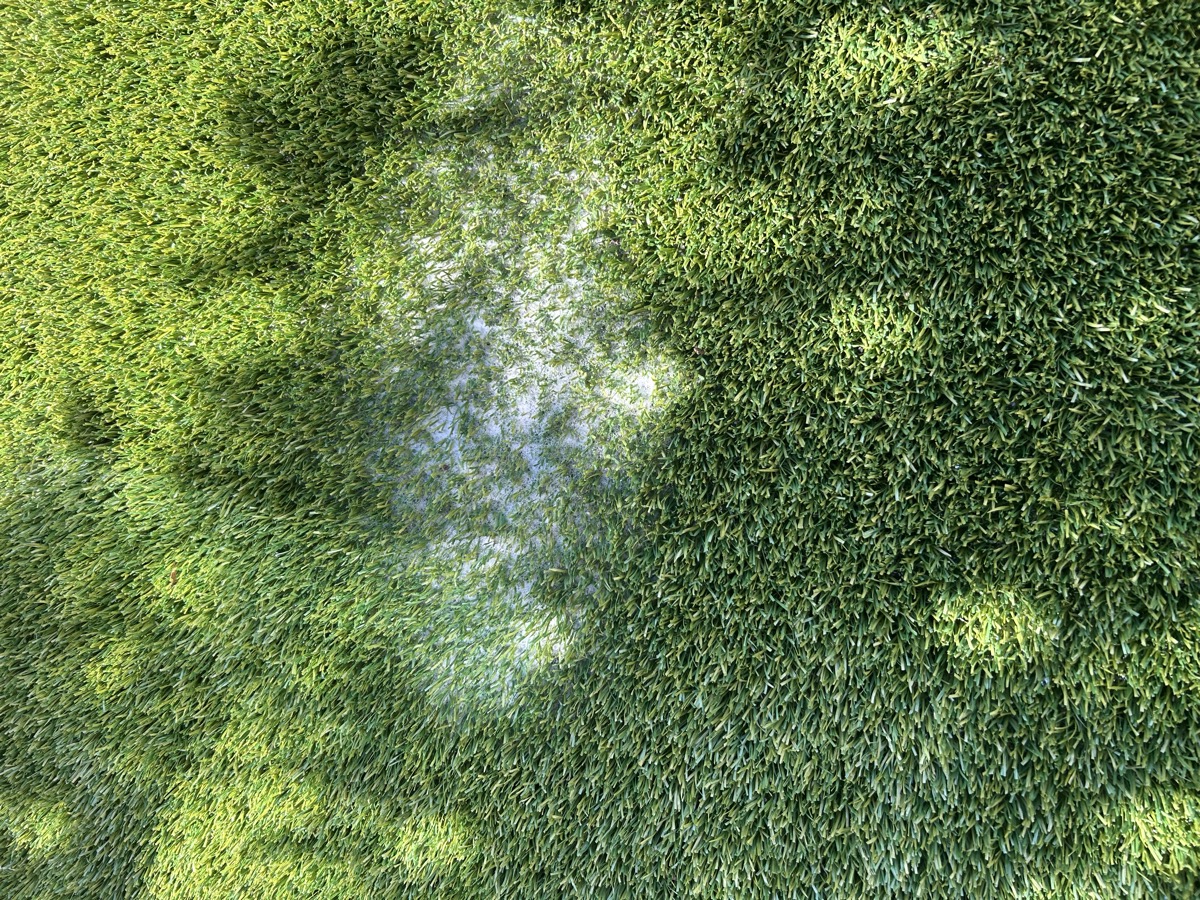
Artificial turf drains through perforations in the backing, but water has to reach the backing first. When the infill void space fills with dust, water sheets across the top instead of moving down. Homeowners notice it after the first real rain, when a corner of the yard holds a puddle that never did before.
The second symptom is the feel. Properly maintained infill has give. A packed yard feels like walking on hardpack.
Third is odor, and this one catches pet owners off guard. Urine that cannot drain through sits in the infill layer instead of passing to the base rock. Then July heat drives the ammonia back up.
Where we see it worst
The yards along the canyon edges off Carmel Mountain Road get it heaviest, along with anything on the Scripps Ranch side that backs to open space. Fully enclosed courtyards fare better. Wind needs a run at the yard to load it up.
Can grit be brushed out instead of extracted?
Not once it is packed. Brushing lifts loose surface debris and stands the blades up, which is worth doing between services, but the grit that matters has already migrated down past where a broom reaches.
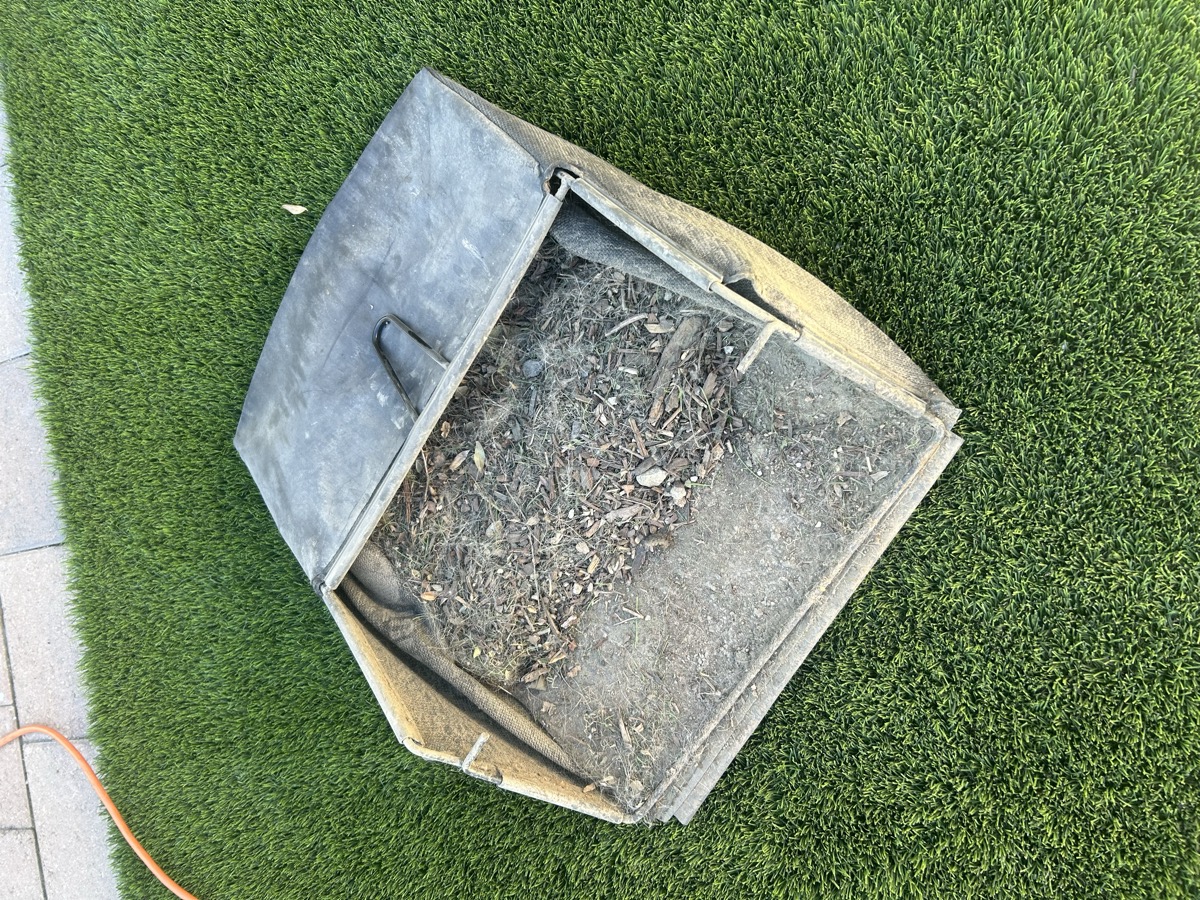
We flush it with deep infill cleaning and vacuum the slurry off. On a yard that has gone two or three Santa Ana seasons without service, the water coming back into the tank runs the color of weak coffee. That is the material that was blocking the drainage.
Timing the cleaning around the wind
Santa Ana season runs roughly October through February in this part of the county, with the sharpest events in the fall. Cleaning right before that window means the yard loads back up over winter. We generally suggest inland homeowners schedule for late winter or spring instead, once the wind has done what it is going to do.
Pet yards are the exception. Dogs set the schedule, not the weather.
A three-dog yard in Sabre Springs we handle needs service well before spring regardless of what the wind did, because the infill saturates faster than dust can pack it.
Most standard backyards in these neighborhoods run about 1.5 hours. A yard carrying several seasons of packed grit plus pet traffic takes roughly double, because the first extraction pass opens the infill and the second one actually clears it.
More detail on the neighborhoods we run on our Carmel Mountain turf cleaning and Scripps Ranch turf cleaning pages. If we have cleaned your yard in either area, mentioning the neighborhood in a Google review genuinely helps neighbors find us.