James Peck
Owner, Mr. Green Turf Clean - Professional turf care specialist serving San Diego County since 2023.
Last updated: 2026-04-15
Last updated: April 2026
What is eco-friendly turf cleaning and does it actually work?
Eco-friendly turf cleaning uses plant-based enzymes and high-temperature steam instead of bleach or chemical deodorizers to sanitize artificial grass. Enzyme cleaners break down uric acid crystals at the molecular level, eliminating 99% of odor-causing bacteria without leaving chemical residue. Professional enzyme cleaning costs $150 to $250 per visit for most San Diego yards.
Two years ago we pulled every chemical product out of our truck. No more bleach solutions. No ammonia-based sprays. No synthetic fragrance maskers that just cover the smell for a week.
We switched to enzyme concentrates and 180-degree steam. And our cleaning results improved.
That surprised us.
Why did we stop using chemical turf cleaners?
The short answer: chemicals were degrading turf fibers on the yards we cleaned regularly. We noticed it first on a repeat customer's yard in Sabre Springs. She had us out every six weeks for a year. The turf looked duller each visit. Fibers were splitting at the tips.
We tested the infill pH after our standard chemical treatment. It was sitting at 9.8. That is alkaline enough to break down polyethylene over time. We were cleaning the turf and slowly destroying it.
The enzyme products we tested ran at a neutral pH of 7.1. Same cleaning power on bacteria. Zero fiber damage.
How do enzyme cleaners remove dog urine smell from turf?
Dog urine contains urea, which breaks down into uric acid crystals. Those crystals bind to turf infill and the backing material underneath. Chemical sprays can dissolve the surface layer of crystals, but the embedded ones stay put. That is why the smell comes back after rain or warm days.
Enzymes work differently. They produce bacteria that consume uric acid as a food source. The crystals get broken down completely, not just dissolved.
We measure results with an ATP meter on every job. Before treatment, a heavily used dog yard in Poway typically reads 800 to 1,200 RLU (relative light units). After our enzyme and steam treatment, we see 5 to 15 RLU. That is a 99% bacterial reduction.
Eco-friendly turf cleaning vs chemical cleaning: what is the real difference?
| Factor | Chemical Cleaning | Enzyme Cleaning |
|---|---|---|
| Odor removal duration | 5 to 10 days | 4 to 6 weeks |
| Bacterial reduction | 85 to 95% | 99%+ |
| Turf fiber damage | Yes, over repeated use | None (neutral pH) |
| Safe for pets after treatment | Wait 2 to 4 hours | Safe within 30 to 60 minutes |
| Storm drain safe | No | Yes, biodegradable |
| Cost per visit (500 sq ft yard) | $120 to $200 | $150 to $250 |
| Infill pH after treatment | 9.5 to 10.2 | 6.8 to 7.2 |
The cost difference is about $30 more per visit for enzyme products. But the turf lasts longer and the odor stays gone between cleanings. Over a year of bimonthly service, you save money because you are not replacing damaged infill.
What we use on every job in San Diego County
Our standard process on a 500 square foot yard in Poway, Rancho Bernardo, or Scripps Ranch:
- Debris removal and power brushing to lift matted fibers (10 minutes)
- Steam treatment at 180 degrees Fahrenheit across the entire surface (15 minutes)
- Enzyme concentrate application, worked into the infill layer (10 minutes)
- Dwell time while enzymes activate (10 minutes)
- Final rinse and infill redistribution (10 minutes)
Total time: about 45 minutes. The enzymes continue working for 24 to 48 hours after we leave.
Does eco-friendly cleaning cost more?
Slightly. Our enzyme products cost us about 40% more than the chemical alternatives we used to carry. But we pass along only part of that increase. A typical residential job in the Poway area runs $150 to $250 depending on square footage and how many pets use the yard.
For reference, a 400 square foot yard with one dog is usually around $165. A 700 square foot yard with three dogs is closer to $230. These are the same prices you would see from companies still using chemicals. We just absorb some of the product cost difference because the results justify it.
Our turf protection membership drops the per-visit cost by about 20% if you are on a regular schedule.
San Diego's water runoff rules and why they matter
San Diego County has strict stormwater regulations. Chemical cleaning solutions that run off turf and into storm drains can carry chlorine, ammonia, and high-pH waste into local waterways.
Our enzyme rinse water is biodegradable. We have tested it and it meets San Diego's MS4 stormwater permit standards. For customers in HOA communities across Carmel Mountain, 4S Ranch, and Del Sur, this matters. Several HOAs in these neighborhoods have started asking about cleaning product ingredients.
We carry our SDS (Safety Data Sheets) on every job. If your HOA or property manager asks, we can provide documentation.
The yards that benefit most from enzyme cleaning
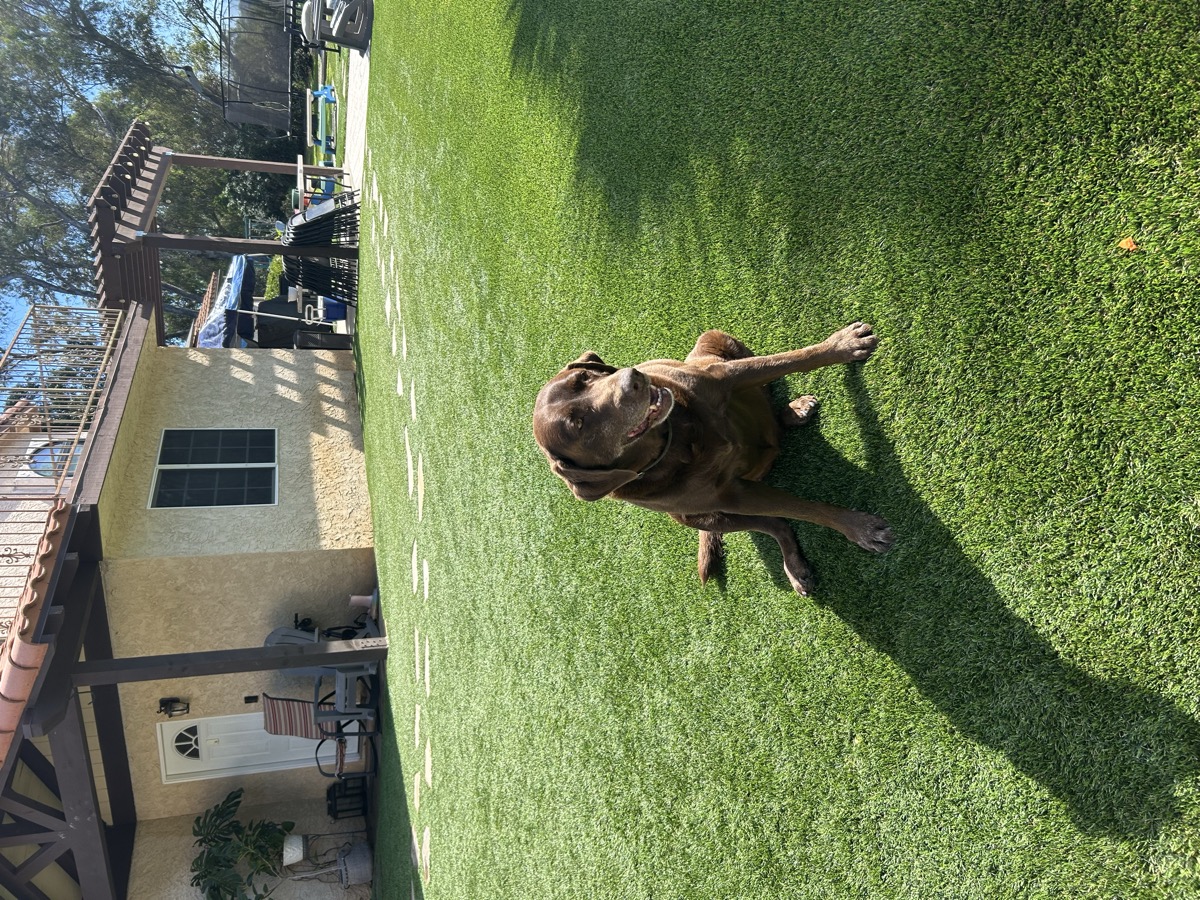
Heavy pet use yards. That is where enzymes pull ahead of chemicals by the widest margin. A yard off Espola Road in Poway with two large dogs that hadn't been cleaned in eight months. The infill was black with embedded waste. Chemical treatment would have required two passes and left residue. Our enzyme treatment broke it down in one visit. ATP reading went from 1,100 to 8 RLU.
And the turf fibers stayed intact. No splitting, no dulling, no bleach streaks.
If you have a turf yard with pets anywhere in San Diego County, we would rather show you the ATP readings than make promises. Book a cleaning and we will test your yard before and after. The numbers do the talking.