What does an HOA turf violation letter in San Diego mean?
An HOA turf violation letter in San Diego almost never says artificial grass is banned. It cites appearance: flattened blades, gray or blotchy color, exposed seams, or odor reaching a neighbor. Cleaning the infill and power brooming the fibers upright resolves most of these notices without replacing any turf.
Last updated: August 2026
A homeowner off Camino Del Sur forwarded us her notice in July with the subject line still on it. She thought the board was making her rip the yard out. It was not. The letter listed two things, matted turf in the side yard and discoloration near the patio, and gave her a few weeks to correct both.
We cleaned it on a Tuesday morning. The yard was 550 square feet and took a little under an hour because the traffic lane by the slider needed a second pass.
Can an HOA in San Diego make you remove artificial turf?
No. California law bars a homeowners association from prohibiting artificial turf on a member's own yard. What an HOA can still do is enforce its appearance standards, which is why the notices we see cite condition rather than the existence of the turf itself.
That distinction matters, because the two situations have completely different costs. A removal fight is a legal problem. A condition citation is a cleaning problem.
Most people who call us have not read past the first paragraph of the letter.
What the notices usually list
- Matted or flattened blades in walking lanes
- Gray, faded, or blotchy color compared to the rest of the yard
- Visible seams or lifted edges at the concrete
- Odor noticeable from the property line
- Debris and grit collected at the borders
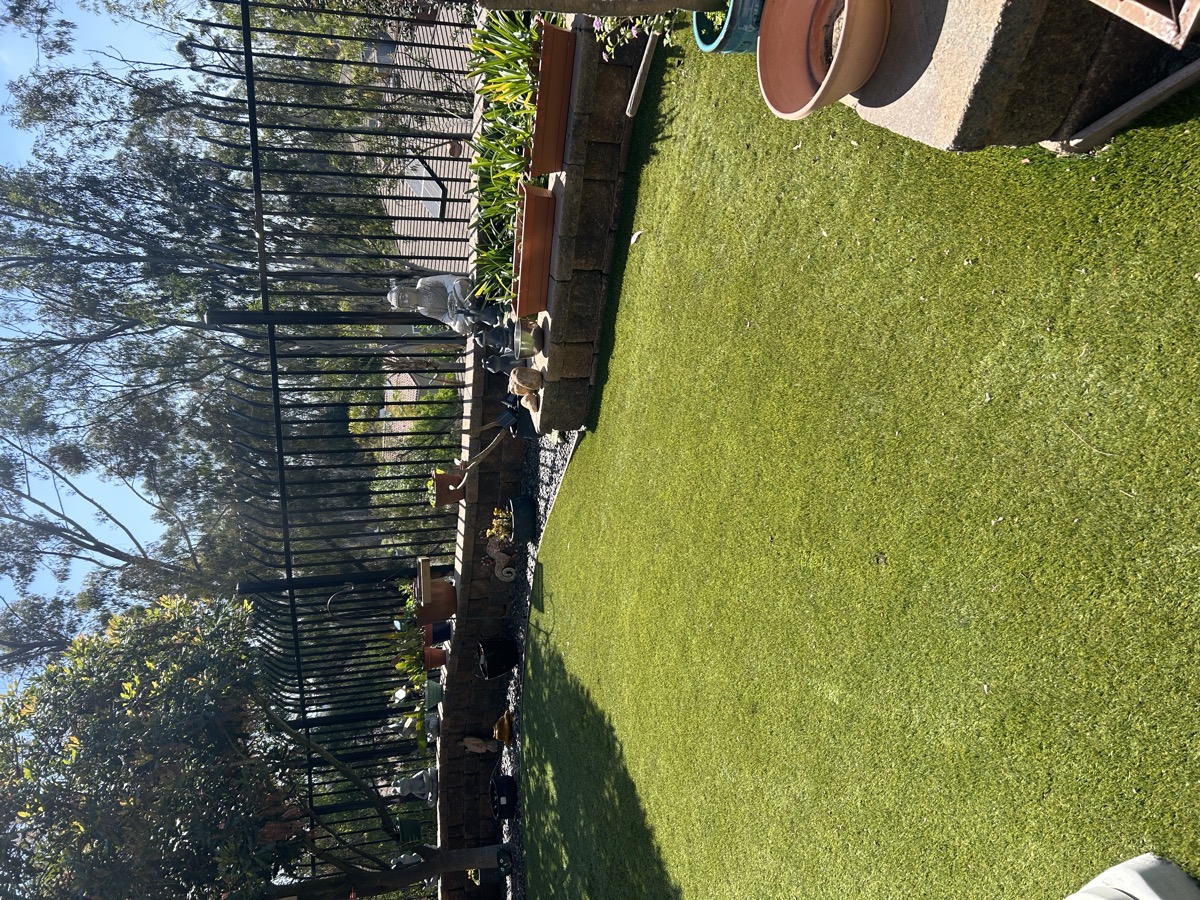
Why turf gets cited in the second and third summer
New turf never gets a letter. It gets one at the two year mark, which is exactly when the infill has compacted enough that the blades lie over and stay there.
Inland communities off the 15 collect grit after Santa Ana wind, and it settles about a quarter inch down, below where any broom reaches. Coastal yards crust with salt instead. Both flatten the fibers, and flattened fibers reflect light differently, which is what a board member sees from the sidewalk and calls faded.
| What the letter says | What is actually happening | What fixes it |
|---|---|---|
| Turf appears faded or gray | Blades lying flat, reflecting light sideways | Power broom to clear debris, then a peroxide-based infill clean |
| Matted areas near patio | Compacted infill in the daily traffic lane | Second extraction pass on that section only |
| Odor at the property line | Urine salts bound into the infill, worse above 85 degrees | Deeper infill flush with vacuum recovery |
| Debris at borders and seams | Wind grit packed against the edge nailer | Edge work by hand before the main pass |
What happens on a compliance visit
We start at the edges, because that is where the inspector looks and where a broom has never been. Then the cleaning solution goes through the infill, and on the yards that need it the extractor follows. Nothing gets left standing in the yard.
The recovery tank tells the story. On a two year old yard that has only ever been rinsed, what comes out is black.
Last comes the power broom. That step is the one the HOA actually sees, because it changes the color of the yard from the street. A standard backyard runs about 1.5 hours. A two dog yard that has gone a year without service can take closer to 2.5 hours, since the odor is held in the infill and a single pass will not pull it.
How long before the yard needs it again?
Most San Diego yards do fine on one or two cleanings a year. Yards with two or more dogs, or homes near the coast where salt air crusts the infill, hold up better on a shorter cycle because odor and buildup set in faster through the summer heat.
If you already have a notice with a date on it, the useful thing to know is that cleaning is a same-day fix and replacement is not. We have never had a homeowner need new turf to clear an appearance citation.
The full sequence is on our turf cleaning services page, and HOA rules on artificial turf in San Diego covers what boards can and cannot require. Neighborhood pages are on service areas.
If we cleared an HOA notice on your yard, mentioning your community and the service in a Google review helps the next homeowner on that street who just opened the same envelope.
That Camino Del Sur yard passed. The board never wrote back, which the homeowner said was the point.