Last updated: July 2026
How do you clean artificial turf?
Clear debris, brush the blades against the grain, then treat the infill rather than rinsing the surface. Odor sits a quarter inch down in the infill, not on the fibers. A surface rinse moves it around. Treating the infill breaks it down where it sits.
Most yards we see have been rinsed dozens of times and never actually cleaned.
That is the whole problem in one sentence. A garden hose wets the top of the blades and pushes a little dust sideways. The urine salts, the fine grit, the broken-down organic matter, all of that has already worked its way down into the infill layer, which in a typical San Diego yard sits somewhere between a quarter inch and a half inch deep. Water without heat and without suction does not lift it.
What actually damages artificial turf during cleaning
We have seen more turf ruined by cleaning attempts than by dogs.
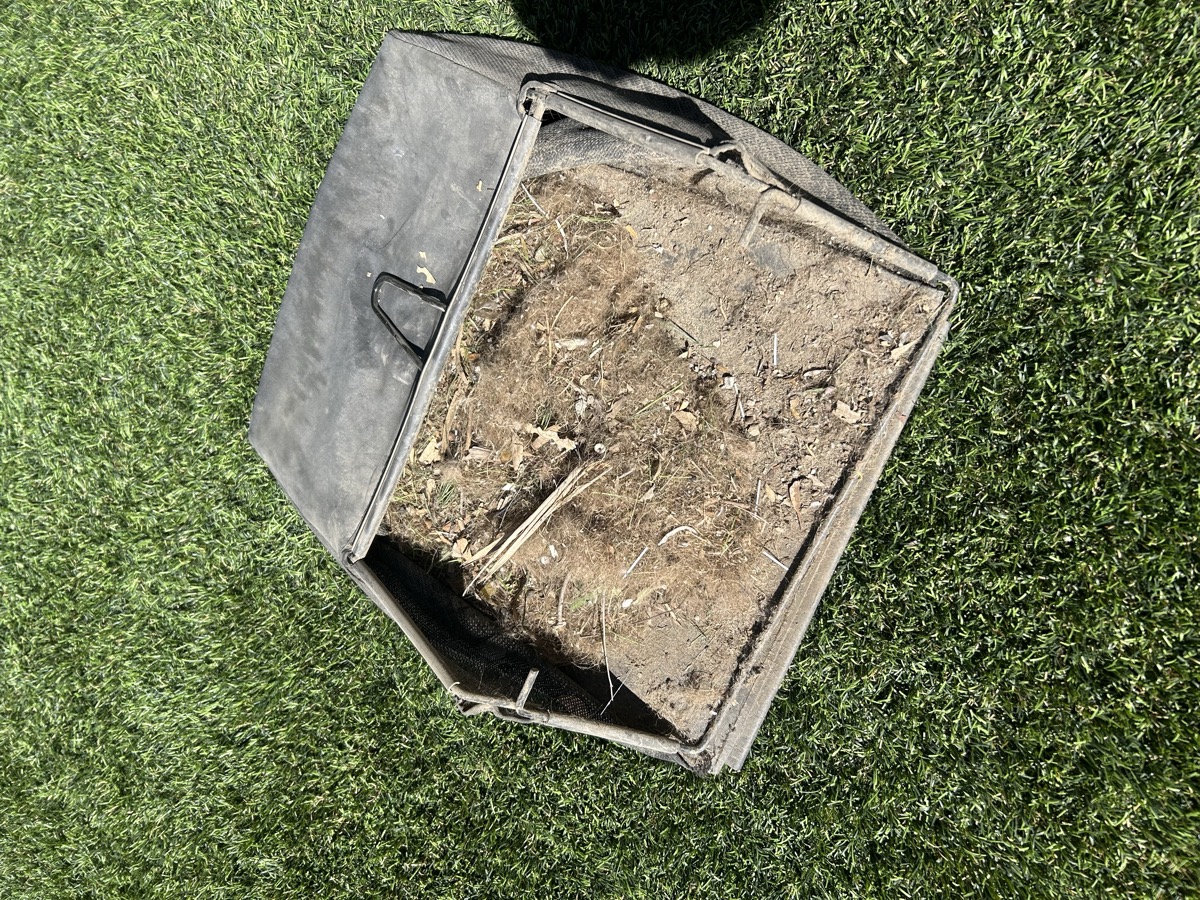
A homeowner in Scripps Ranch went at her yard with a consumer pressure washer held about six inches off the surface. The blades in that strip laid down flat and never stood back up, and a good amount of infill blew out into the flower beds. Once infill is gone, the fibers have nothing holding them upright and the yard reads as worn even though the turf itself is fine.
The other common one is bleach. It fades the color unevenly, leaves a pale patch that never blends back, and does nothing to the infill where the smell lives.
Stiff metal rakes are third on the list. They tear the tufts loose from the backing.
What to avoid
- Pressure wands held close to the surface
- Bleach, ammonia, and pool chlorine
- Metal-tined rakes and wire brushes
- Letting leaf litter sit through a wet week, which composts into the infill
DIY rinsing vs professional extraction
| Factor | Garden hose rinse | Peroxide-based infill clean |
|---|---|---|
| Reaches the infill layer | No | Yes |
| Removes the dirty water | No, it soaks in | Vacuumed back out |
| Effect on urine salts | Redistributes them | Dissolves and extracts |
| Time on a 500 sq ft yard | 15 to 20 minutes | About 45 minutes |
| How long the result holds | Days in summer heat | Months, depending on pet traffic |
How often should artificial turf be cleaned?
Once or twice a year covers most San Diego yards. Two or more dogs, or a coastal yard where salt air crusts the infill, does better on a shorter cycle.
July is when the calls come in. Heat drives the ammonia off the infill and a yard that smelled fine in March becomes unusable by mid-afternoon.
What a proper cleaning looks like start to finish
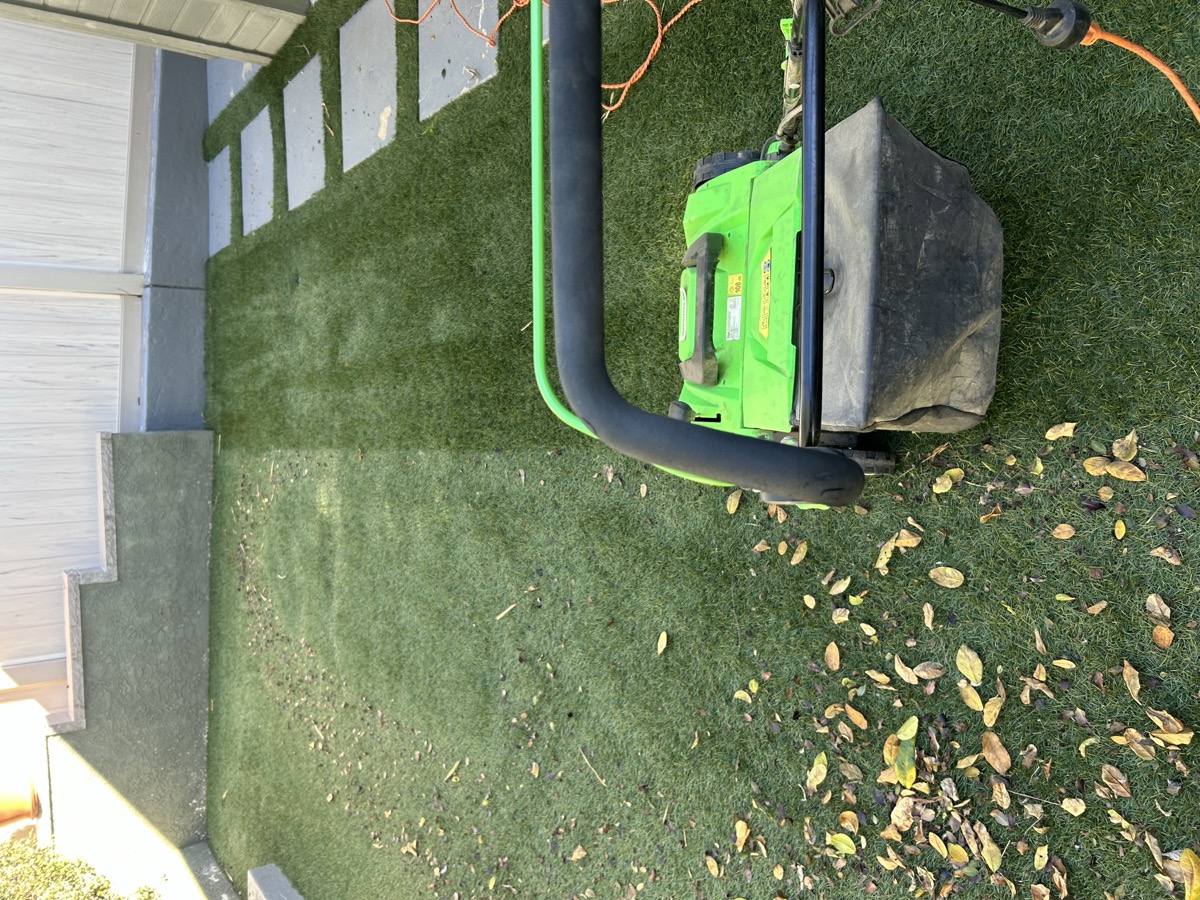
- Blow and pick the yard clean of leaf litter and waste.
- Brush against the grain to open the blades so water can reach the infill.
- Work the cleaning solution through the infill in overlapping passes.
- Vacuum the slurry back out instead of letting it settle.
- Power broom the fibers upright while the yard is still damp.
A standard backyard takes about 1.5 hours. A two-dog yard that has gone a year without service takes closer to 2.5 hours, because the first pass only lifts the top layer and the odor is deeper than that.
We ran a yard off Espola Road in Poway last summer where the owner was certain the turf needed replacing. It did not. The infill had gone black with compacted organics and one slow pass with a second extraction sorted it.
See our turf cleaning services for the full process, or the pet turf cleaning page if dogs are the reason you are reading this.