How Do You Clean AstroTurf?
AstroTurf and other artificial grass clean the same way: clear the debris, work a peroxide-based cleaning solution into the infill to break loose trapped salts and grit, then refresh the infill. A garden hose only wets the surface, so odor and buildup come back within a day.
Last updated: July 2026
People call it AstroTurf out of habit. Most backyard turf in San Diego is not the AstroTurf brand, but the cleaning is identical, so the name does not change what we do.
We cleaned a yard off Twin Peaks Road in Poway last month where the owner had worked the surface for a year with a push broom and dish soap. The blades looked fine. The base did not.
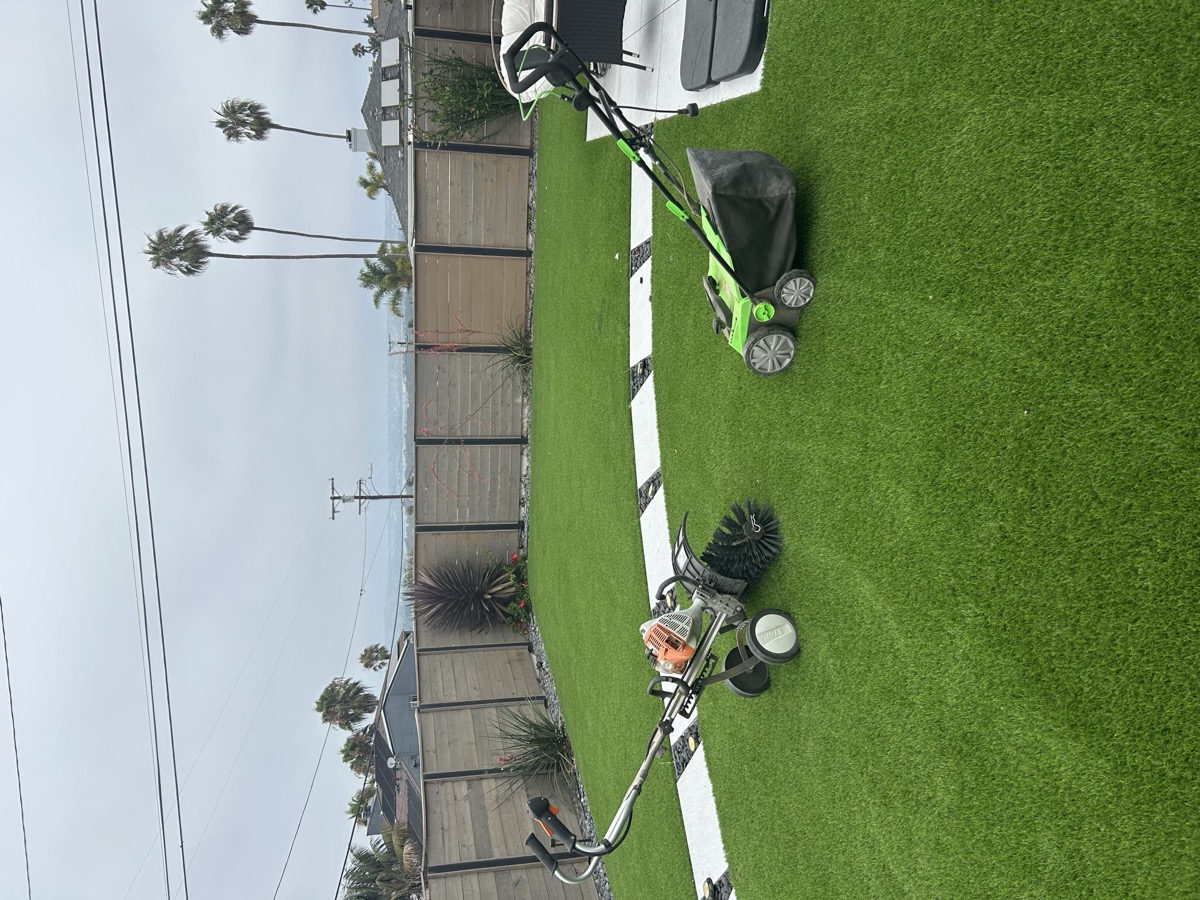
Why a Broom and a Hose Are Not Enough
Here is what most people miss. The smell and the dark patches do not live on the blades. They live in the infill, the layer of sand or rubber granules packed down between the fibers.
Dog urine dries into salt crystals down in that infill. A hose wets those salts, they smell for a minute, and then they dry right back out. That is why a rinsed yard smells clean for a day and sour again by the next warm afternoon.
And San Diego hard water makes it worse. The minerals in our tap water leave a chalky scale on the fibers over time, which is a separate problem we cover in our post on chalky residue.
Garden Hose vs Professional Extraction
| Method | What it reaches | How long odor stays gone |
|---|---|---|
| Garden hose rinse | Surface blades only | About a day |
| Push broom and soap | Surface film | A few days |
| Peroxide-based infill clean | Down into the infill | Weeks to months |
The difference is treating the infill. We work a peroxide-based cleaning solution into it to break the salts loose, and on the worst yards the extractor takes the rest off. A hose has no way to lift anything out. It can only push it deeper.
How Often Should You Clean AstroTurf?
For a yard with no pets, once a year keeps the fibers upright and the base draining. For a two-dog yard, twice a year is closer to right, and a heavy summer with a lot of traffic can shorten that.
Between professional cleanings, you can slow the buildup yourself:
- Pick up solid waste the same day so it never works into the infill.
- Rinse high-traffic spots weekly to keep salts from concentrating.
- Cross-broom matted paths so the blades do not set flat in the sun.
None of that replaces an extraction. It just buys you time between them.
What About DIY Machines?
A rented carpet extractor can move some water, but it does not put out the pressure or the heat to break salt crystals loose in a packed infill, and the small heads take forever across a full backyard. A standard San Diego backyard takes us about 1.5 hours with the right equipment. We run the county from one Poway base, so a crew is rarely more than 30 minutes out.
See how we run a full job on our turf cleaning services page, or the deeper pet-yard version on how to clean synthetic turf.
That Twin Peaks yard drained normally again by the time we packed up. The blades were the same ones the owner had been scrubbing for a year. They just needed the base flushed instead of the top polished.