How do you disinfect artificial grass?
Disinfecting artificial grass means flushing the infill, not spraying the surface. Bacteria and odor live in urine salts that bind about a quarter inch down. A peroxide-based cleaning solution goes through that layer and breaks it down. Surface sprays sit on top and wear off in days.
Last updated: July 2026
A customer in Rancho Penasquitos asked us this after buying a jug of concentrate from a big box store. She had sprayed her yard three weekends in a row. The smell came back every Tuesday.
It came back because the product never reached the problem. Her yard drained fine. The odor was not sitting on the blades.
Why surface sprays stop working by midweek
Dog urine does not evaporate off synthetic turf the way it does off soil. The liquid drains through, but the salts stay behind and bind to the infill granules. Heat reactivates them.
That is why July is our busiest month across San Diego. A yard that was tolerable in April becomes unlivable when the surface hits triple digits and the salts go back into the air.
Spray a deodorizer on that and you get a scented version of the same yard. Three days, maybe four.
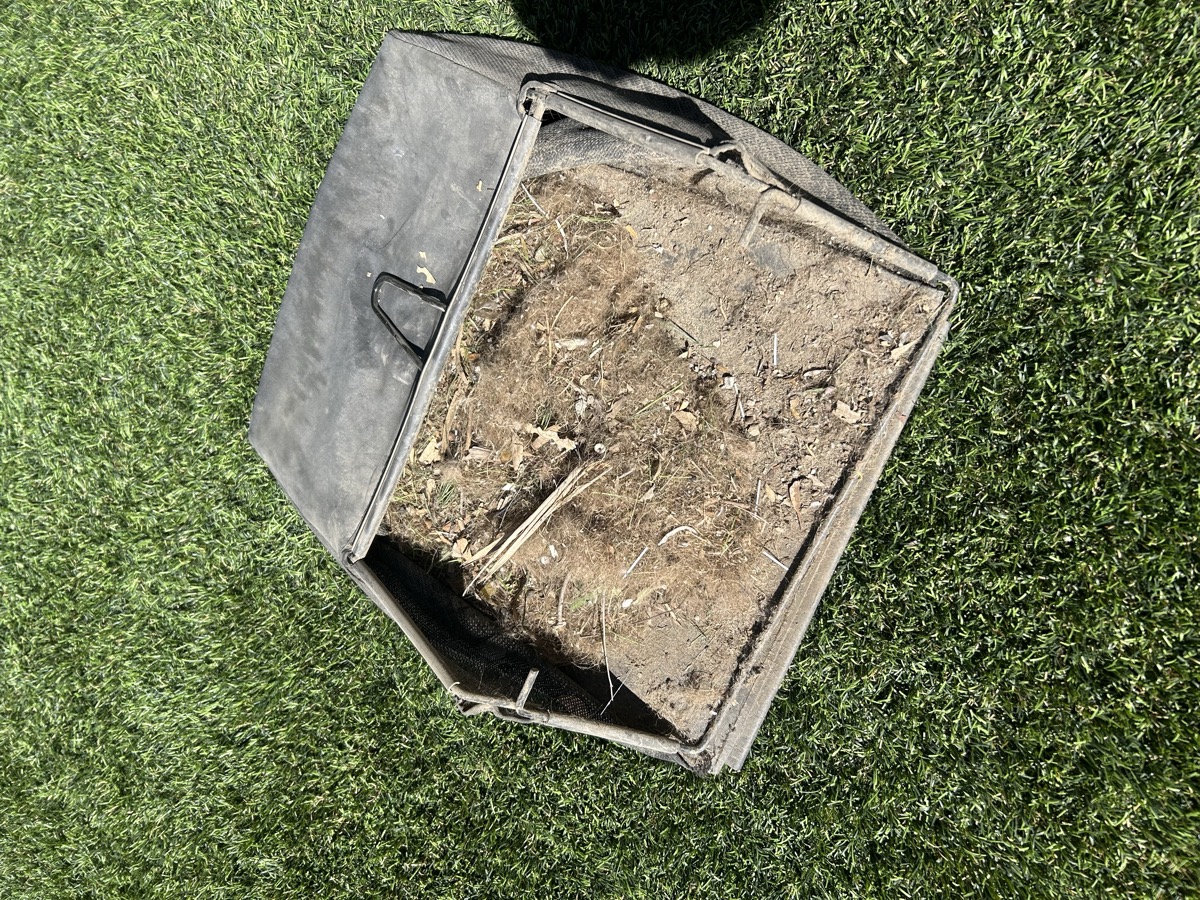
Surface rinse vs treating the infill
| Method | Reaches infill | How long it holds |
|---|---|---|
| Garden hose rinse | No, runs off the blade tips | Hours |
| Store deodorizer spray | Partially, sits in the top layer | Days |
| Peroxide-based infill clean | Yes, flushed and vacuumed back out | Months |
We use one peroxide-based process. No bolt-on rinse products. The cleaning solution goes where the buildup is, fresh pet-friendly infill goes back in, and the extractor comes out on the yards that still hold a smell.
The vacuum step is the part most people skip when they try this themselves. If you flush without extracting, you have just moved the salts deeper into the base rock.
What damages artificial grass backing
Bleach is the common one. It strips color out of the fibers and, worse, degrades the stitching that holds tufts into the backing. We have seen yards where the tufts pull out by hand after a bleach treatment.
Bleach also kills anything living at the drainage holes, which sounds fine until you realize the backing perforations are what keep the yard from ponding.
Straight vinegar is the second one. It will knock down odor briefly. It also leaves an acidic residue that reacts with San Diego hard water and leaves a white film worse than what you started with. We wrote about that residue in this post on chalky buildup.
Pressure washing at full trigger is the third. A Scripps Ranch customer took a 3000 PSI wand to her own yard and blew the infill into windrows along the fence line. The blades never stood back up.
How long does a real disinfecting clean take?
A standard backyard around 500 square feet runs about 1.5 hours. That covers the extraction pass and the power broom afterward.
A two-dog yard that has gone a year without service takes closer to 2.5 hours. The infill holds the odor and one pass will not pull it. We schedule those longer on purpose rather than rushing and calling it done.
Yards near the coast, La Jolla and Del Mar especially, get an extra complication. Salt air crusts the infill on top of whatever the dogs contributed, so those need a shorter service cycle than inland yards.
What we tell people to do between cleanings
Pick up solids the same day. Rinse the spot, not the whole yard, and rinse long enough that water actually moves through rather than beading on the blade tips.
Brush against the grain in high-traffic paths every few weeks. Matted fiber traps more than upright fiber does.
And leave the chemistry alone. Almost every damaged yard we have been called out to fix was damaged by a product, not by neglect. See our turf cleaning services for what the full process involves, or the pet turf cleaning page if dogs are the whole reason you are reading this.
If we cleaned your turf somewhere in San Diego County, mentioning your neighborhood and the service in a Google review helps other homeowners nearby find us.