Last updated: July 2026
Why Does Pool-Deck Turf Get Slick and Smelly in Summer?
Sunscreen, tanning oil, and body oil rinse off swimmers and soak into the infill under poolside turf. The oils trap dirt and hold odor, and rain or a garden hose cannot lift them. Treating the infill directly is the only thing that gets oil-bound infill clean and restores drainage.
We cleaned a turf pool deck off Espola Road in Poway last week. The owner swore the yard smelled fine in winter and turned sour every July.
She was right. And the pool was the reason.
Every kid who climbs out of the water drags sunscreen and body oil across the turf. It sounds like nothing. But a family that swims most summer days lays down a thin oil film on the same square footage over and over, and that film never fully dries in the sun.
What the oil actually does to the infill
Turf infill is a bed of sand or coated granules sitting between the blades. It is supposed to let water pass straight through to the drainage base. Oil changes that. It coats each granule and makes the infill hold onto dust, dead skin, and pollen instead of letting it rinse away.
Then it bakes. Poway pool decks read 150 to 165 degrees on a July afternoon on a heat gun. That heat drives the oil deeper into the infill and sets it.
By August you get a surface that feels slick underfoot, sheds water in beads instead of draining, and gives off a stale smell when it gets wet. Most owners blame the dog. Half the time the dog has nothing to do with it.
Can You Clean Sunscreen Out of Artificial Grass With a Hose?
No. Cold water and oil do not mix, which is the whole problem. A garden hose pushes the oil around and drives some of it deeper, and the surfactants in most spray-on turf cleaners are not built to break an oil bond that has been curing in 160-degree heat for two months.
Here is how each approach we see homeowners try tends to hold up.
| Method | What it does to oil-bound infill |
|---|---|
| Garden hose rinse | Moves surface dust, leaves the oil film and odor in place |
| Spray-on turf cleaner | Freshens the smell for a day or two, does not lift cured oil |
| Pressure washer | Blasts infill out of the turf and can split the backing seams |
| Peroxide-based infill clean | Heats and flushes the oil out of the infill, then vacuums the slurry back up |
How We Clean an Oil-Loaded Pool Deck
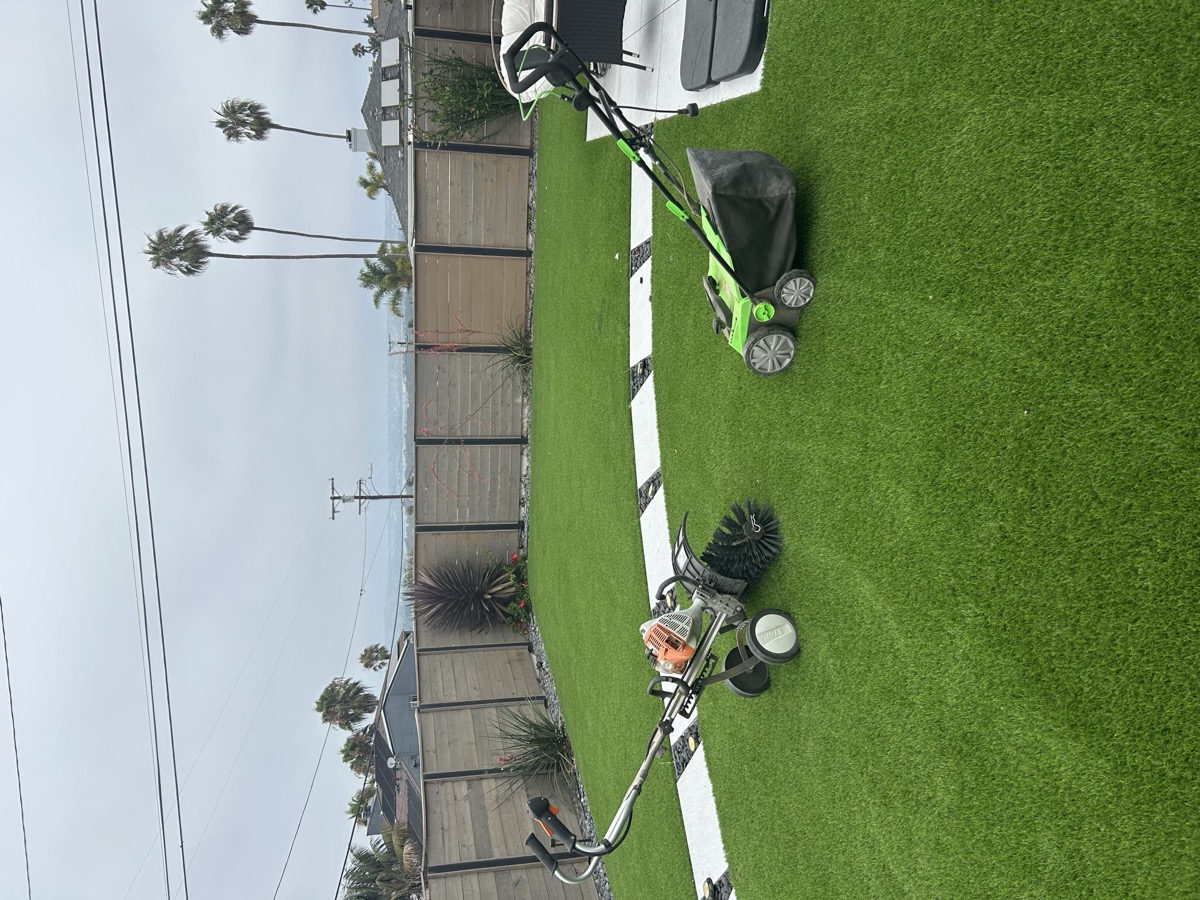
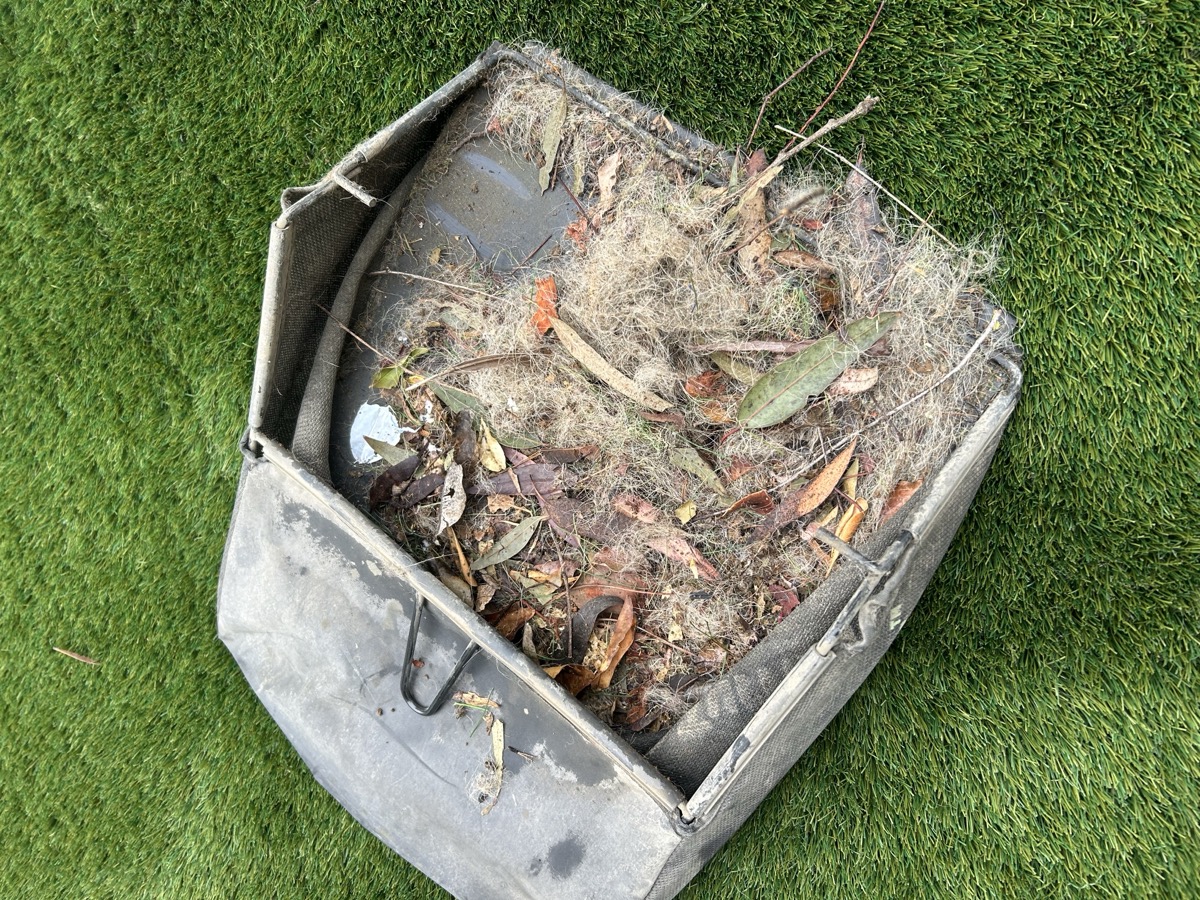
We run heated water through the infill and pull the loosened oil, dust, and slurry back out with a vacuum in the same pass. Then a power broom stands the flattened blades back up so the deck stops looking shiny and matted.
A standard backyard takes about 1.5 hours. A pool deck that has cooked all summer takes longer, closer to an hour and a half, because the first pass only breaks the top of the oil layer and the infill needs a second flush.
We do the same deeper flush on pet yards, which you can read about on our pet turf cleaning page. The full process for every job is on our turf cleaning services page, and if you want to hold the deck over between visits, our guide on how to clean synthetic turf covers what actually helps.
When to book a pool-deck cleaning
Late summer is the worst buildup and the best time to clear it. We tell Rancho Bernardo and Poway pool owners to get the deck flushed once between July and September, before the oil sets through another heat cycle.
If your turf beads water instead of draining, or feels slick where wet feet cross it, the oil is already in the infill. A rinse will not reach it. We will.