Last updated: August 2026
Where the black grit by your back door comes from
Black grit tracked indoors from a turf yard is crumb infill, not garden soil. It sits about a quarter inch under the blade line, works up to the surface in summer heat, and rides inside on shoe treads and dog paws. A proper infill clean lifts it out. Rinsing only moves it sideways.
Trendir ran a piece this week telling homeowners that outdoor shoes are the main thing wrecking their indoor air and floors, with a five minute entryway fix. A tray, a mat, a bench, shoes off at the door.
That advice is fine as far as it goes. It stops at the threshold. In a San Diego house with a turf yard, the problem starts about thirty feet earlier, out where the infill sits.
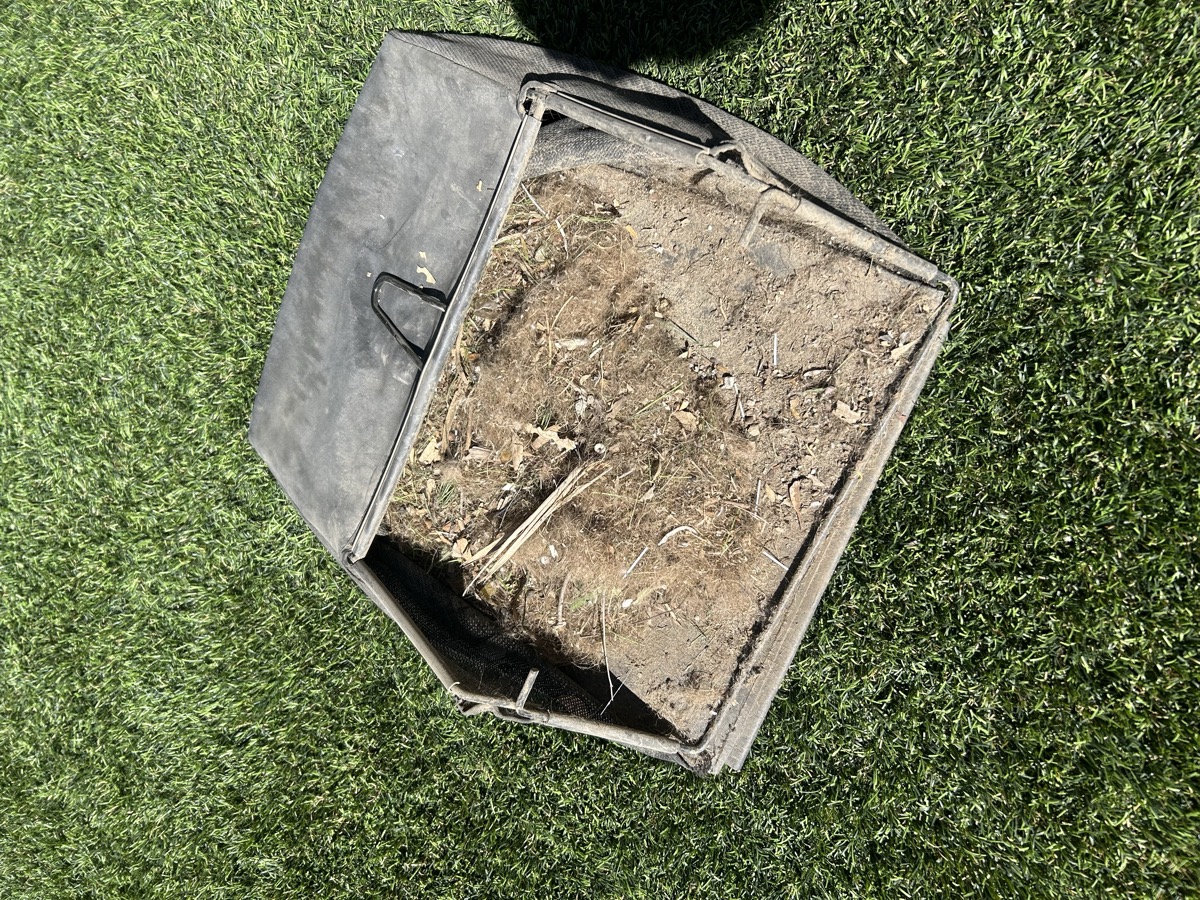
What is actually on the shoe?
We pull four different things out of yards, and each one leaves a different mark on tile.
| What you are tracking in | Where it comes from | What removes it |
|---|---|---|
| Black or tan crumb infill | The infill layer under the blades | Infill clean plus extractor where needed |
| White chalky dust | Hard water minerals dried on blade tips | Infill clean, not brushing |
| Fine grit | Santa Ana wind deposit settled into the pile | Extraction through the full infill depth |
| Dried urine salt | Pet traffic, worst along the fence line | Deep infill flush, usually two passes |
The chalky one fools people. They assume the house needs dusting more often. It is the yard.
Why does it get worse in August?
Heat is the reason. Turf surface temperature climbs well past what anyone will stand on barefoot by early afternoon, the backing expands, and the infill migrates upward instead of staying seated where the installer broomed it in. Then it sits loose on the surface. Every paw and every shoe tread takes some.
We cleaned a yard off Twin Peaks Road in Poway last month where the homeowner had put down two entry mats and was still sweeping the kitchen twice a day. The yard was three years old and had never been extracted, only hosed. The infill had come up so far you could see the granules sitting on top of the blades in raking light.
That 500 square foot yard took about 90 minutes instead of the usual 45, because a single pass would not pull it.
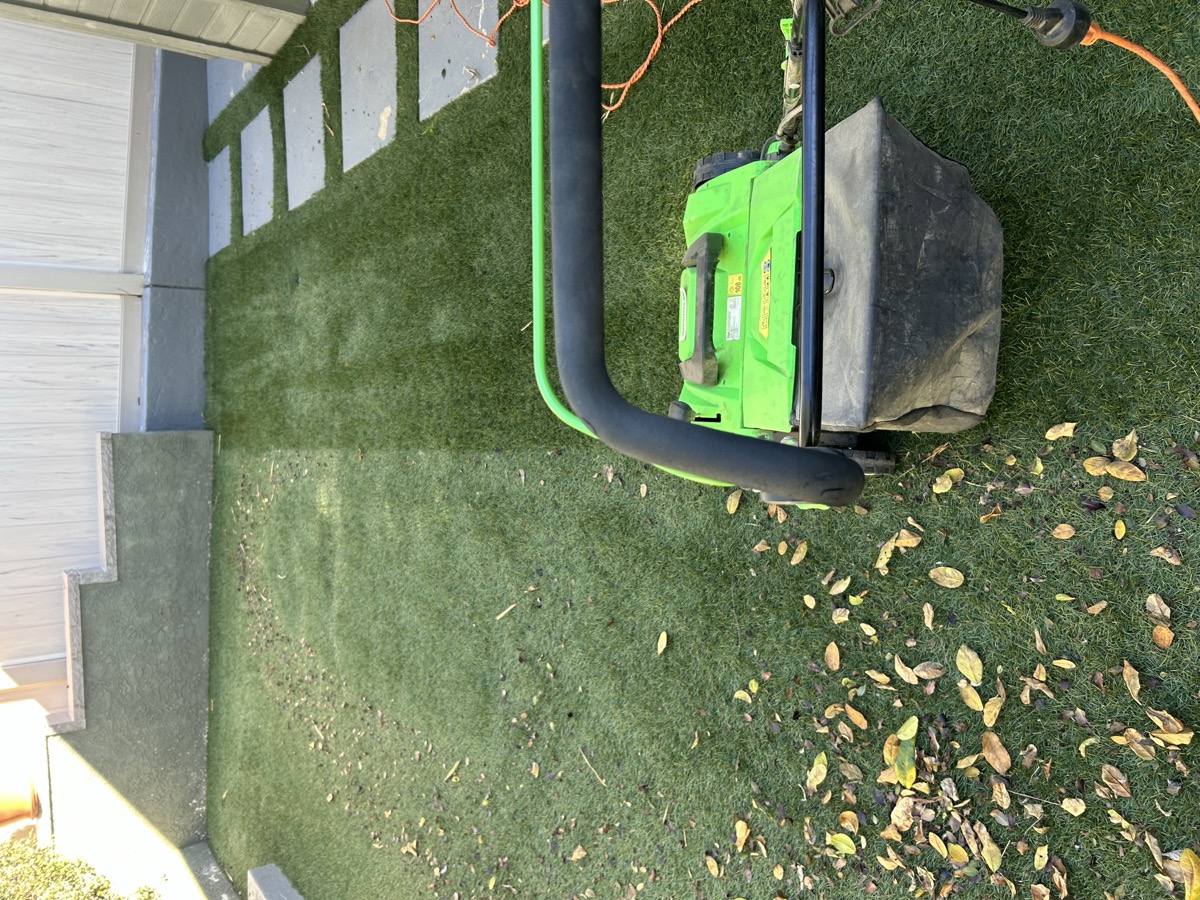
Does taking your shoes off actually fix it?
Taking shoes off helps, but it only catches half of it. Dogs do not take their paws off. In a pet yard the infill that reaches your floor is carrying urine salt with it, and a mat at the door does nothing about the source sitting a quarter inch down in the turf.
Mats and a bench are worth doing. So is a rinse of the dog's feet before they come in. But if the grit keeps showing up after all of that, the yard is telling you the infill layer is loose and loaded.
And a hose will not settle it. Rinsing pushes granules toward the low corner of the yard and drives the salts sideways rather than lifting them out. Our pass works a peroxide-based cleaning solution down through the infill, then fresh pet-friendly infill goes back so the granules sit where they belong.
Most San Diego yards want that once or twice a year. A two dog yard, or a house near the coast where salt air crusts the infill, does better on a shorter cycle. See our turf cleaning services page for the sequence we run, or the backyard dust and indoor air piece for what else the yard sends inside.
If we cleaned your turf somewhere in San Diego County, mentioning your neighborhood and the service in a Google review helps other homeowners nearby find us.